The Night We Drove Home in Silence

For years, I thought the measure of a successful family outing was simple.
Did everyone get to experience it together?
I don't remember anyone ever saying that out loud. It was simply the picture I had quietly carried into adulthood. Families went places together. They wandered through museums together, took vacations together, stood in line for ice cream together, and smiled for photographs that eventually found their way onto Christmas cards. Somewhere along the way, I accepted that togetherness itself was the goal.
The Nashville Zoo slowly began teaching me otherwise.
A few months before Zoolumination opened, the zoo hosted a life-sized dinosaur exhibit. Silas was completely fascinated by dinosaurs, and on paper it seemed like the perfect afternoon. Khai had always loved being outside, and in previous years he had been content riding in his stroller while we explored. We packed everything we'd learned to carry by then—snacks, favorite toys, headphones, an iPad, music on our phones—and hoped we'd make it through the afternoon.
We didn't.
Instead of looking at the dinosaurs, Khai became captivated by everything that moved around them. Stroller wheels, wagon wheels, maintenance carts, people crossing in every direction. It was as though his eyes were trying to follow every moving piece of the world all at once. Before long, he was trying to run toward each new thing that caught his attention, and every attempt to redirect him only seemed to make the world feel bigger and louder.
That day ended the way many outings did during those years: Pete carried Khai back to the car while he screamed, people stared, and I found myself wondering what they believed they were witnessing.
Still, hope has a remarkable way of convincing us that next time will be different.
So when Zoolumination opened later that year, I wanted so badly for our family to experience it together. My mother-in-law happened to be visiting, and I'd spent weeks looking at photographs online of glowing lanterns stretched across the zoo, imagining the boys walking beneath them together. It felt like one of those memories families were supposed to make.
For a little while, everything was fine. Then, the world became too much. Pete and I recognized it before either of us said a word. We had learned the subtle signs that meant Khai's nervous system was reaching its limit. We tried to help him settle into his stroller so we could quietly make our way back toward the parking lot before everything unraveled. Instead, he fought with everything he had.
Every time we fastened the straps, he bent his entire body forward trying to get out. He threw his weight so forcefully that I stopped worrying about the screaming and started worrying the stroller itself would flip forward onto the pavement. Pete wrapped his arms around him, not to force him to stay still, but to keep him from hurting himself while we figured out how to get him somewhere safe.
From where everyone else stood, I imagine it looked frightening. It probably looked like two adults trying to force a screaming child into a stroller he didn't want to be in. What they couldn't see was that we weren't trying to make him comply. We were trying to keep him from running into a crowd, throwing himself onto the pavement, or disappearing into a sea of thousands of people while his nervous system had already stopped processing the world around him.
The louder he screamed, the quieter everything around me seemed to become.
I remember looking up and seeing people stop walking. Some stared openly. Others whispered to one another. I don't remember exactly what they said. I only remember realizing that every person watching us believed they understood the story unfolding in front of them.
None of them did.
Pete finally picked Khai up and started walking toward the parking lot. I stayed behind with Silas. I knelt beside him and told him that he and I could still go through Zoolumination together. Daddy and Marmee would get Khai settled, and we could meet them afterward. I remember asking more than once. Each time he quietly shook his head.
He wasn't angry.
He wasn't pouting.
He was simply finished.
He loved his brother more than he wanted to see the lights.
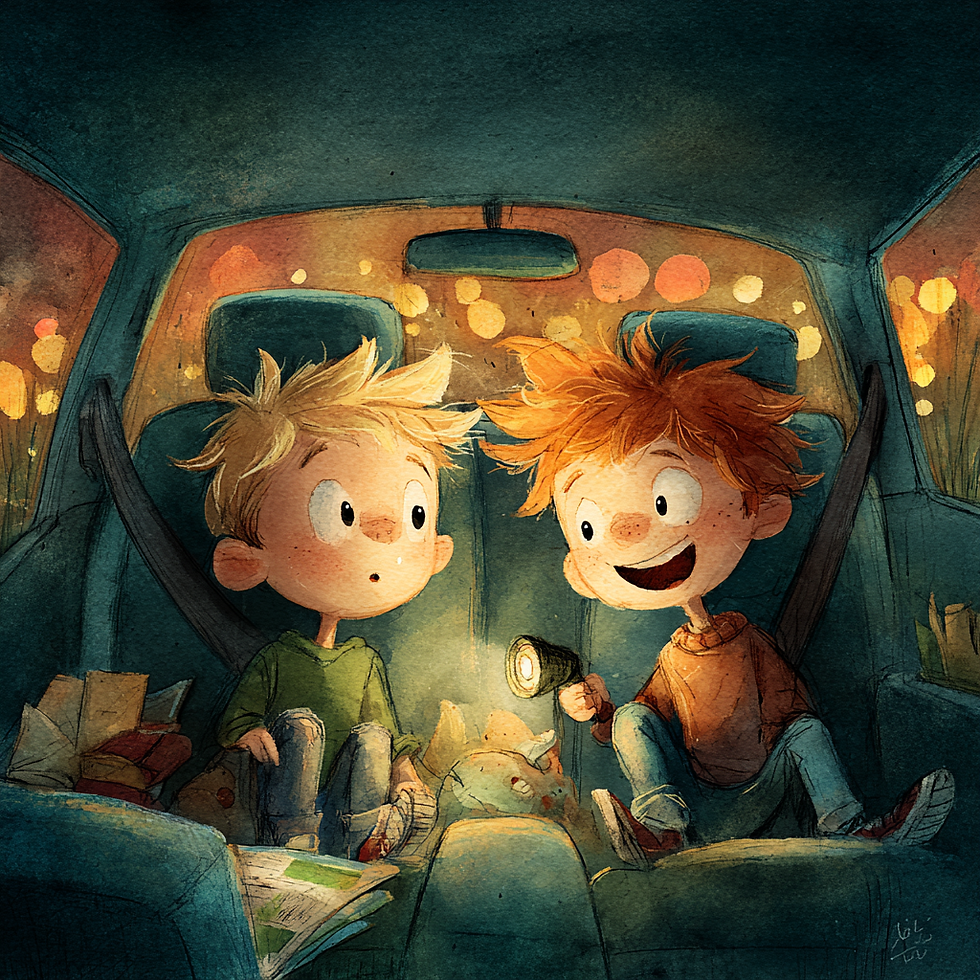
Looking back, I think his young heart understood something mine was still resisting. The five of us climbed into the car and drove home in complete silence. No one tried to make conversation. No one suggested another outing. Even my mother-in-law sat quietly between us, and I remember having the strange feeling that we were all arriving at the same conclusion without ever speaking it aloud.
Later that night, while everyone else was getting ready for bed, I laid beside Khai while he drifted off to sleep. He was calm, happy, and peaceful. The same little boy who, only an hour earlier, had sounded as though the world was ending. I rubbed his back and told him how much I loved him.
Somewhere in that quiet room I finally allowed myself to grieve. Not because my son was autistic. Not because our family looked different than I had imagined. I grieved the picture I had been carrying for years—the one where every experience had to be shared by everyone in exactly the same way. It was the first time I admitted to myself that we were probably never going to be that family. And strangely, that realization brought relief.
Once I stopped trying to protect the picture, I could finally protect the people.
Silas deserved to experience the world in the way that filled him with wonder. Khai deserved to experience the world in the way that allowed his nervous system to remain safe. Pete and I deserved permission to stop believing that every meaningful memory had to include all four of us standing in the same place at the same time.
What's remarkable is that none of us ever said any of this out loud. There was no family meeting. No long conversation. No decision that from now on we would divide and conquer. We simply began doing it.
Pete would take Khai somewhere he genuinely enjoyed while I explored events, stores, or science centers with Silas. Other days, we traded places. Slowly, almost without noticing, our family became lighter. There was less guilt, less disappointment, and more freedom for each of us to experience the world in the way we experienced it best.
I've come to believe that acceptance is rarely one dramatic moment. More often, it arrives quietly. Sometimes it looks like five people driving home in silence, each carrying the same realization without needing to say a word. And sometimes, if we're willing to listen carefully enough, silence teaches us everything we needed to know.
From the Studio
This memory eventually became one of the moments that inspired Too Loud, Too Bright, my children's book about sensory overwhelm, understanding, and helping children feel safe in a world that can sometimes ask too much of their nervous systems.
If you'd like to continue the conversation, you can learn more about the book here.


Comments